The Footing Pour That Pays for Itself — and the Estimate That Doesn't
October 19, 2026 · from the GateCurate team
The Footing Pour That Pays for Itself — and the Estimate That Doesn’t
Most construction operators can price a job in their sleep. What keeps them awake is the stack of unread inquiries between them and the next pour.
TL;DR
- The best construction operators treat intake as a job-site discipline, not an office chore — they know a lead’s value before they pick up the phone.
- Speed to the right lead beats speed to every lead; the ones who last have a system for knowing which inquiry deserves their next hour.
- When qualification happens before the first call, the conversation can be about the work — not about whether there’s work worth doing.
The 14-Hour Gap Between Intent and Follow-Up
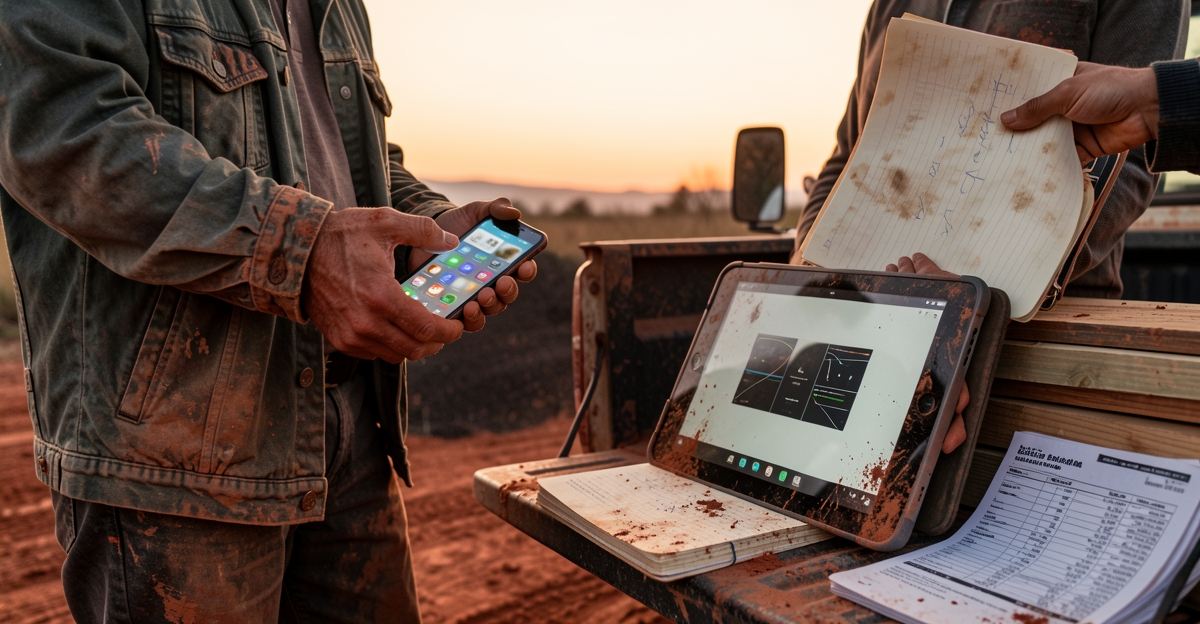
Marcus runs a four-person crew outside Raleigh. Last Tuesday he poured a foundation starting at 6 AM, broke for lunch covered in red clay, and checked his phone at 3:47 PM. Three inquiries had come in since dawn. One was a kitchen remodel in a zip code he doesn’t serve. One was a commercial tenant improvement with a six-month timeline and no budget stated. The third was a homeowner whose basement flooded Saturday night and who had already called two other contractors by the time Marcus saw the message.
He spent forty-five minutes that evening — his only quiet window — sorting through what should have taken ninety seconds at 7:15 AM.
This is the hidden tax on construction operators who build their own demand. The Bureau of Labor Statistics counts more than 7.5 million construction jobs in its projections, and a growing share of those workers are owner-operators or small crews who answer their own phones between swings of the hammer. The ones who survive aren’t necessarily the best builders. They’re the ones who figured out that every hour spent on intake is an hour not spent on billable work — and that the cost compounds faster than materials inflation.
The ones who survive aren’t necessarily the best builders. They’re the ones who figured out that every hour spent on intake is an hour not spent on billable work.
The gap isn’t just time. It’s attention. A foundation pour demands continuous presence — the mix, the grade, the cure. But a lead’s intent decays in hours, not days. The homeowner with the flooded basement has already moved down their list by the time Marcus finishes rinsing off. The commercial client with the vague timeline has forgotten they even submitted a form. The kitchen remodeler in the wrong zip code was never going to convert, but Marcus still spent mental bandwidth reckoning with the notification.
Why CRMs Make This Worse, Not Better
Most operators who feel this pain do what any reasonable person would: they buy a tool. A CRM, a scheduler, an auto-responder. Something to “organize” the flow.
The problem is that organization without qualification just creates a prettier version of the same problem. A CRM that captures every inquiry and dumps it into a pipeline doesn’t tell you which lead is the flooded basement and which is the six-month maybe. It gives you a dashboard with names and timestamps, not judgment. You still have to make the call — literally and figuratively — about where your next hour goes.
The Associated General Contractors of America, in its 2026 Construction Hiring and Business Outlook, notes that contractors are entering the year with “dampened expectations” — lower confidence in backlogs, more uncertainty about where the next job comes from. In that environment, every inquiry feels like oxygen. You don’t want to miss one. So you treat them all equally, which means you treat none of them with the urgency they actually deserve.
The CRM becomes another inbox. Another notification stack. Another place where the right lead drowns beside the wrong one, and where your best hours get spent on conversations that were never going to convert.
Why the Pattern Holds
Construction has a peculiar demand curve. Most operators don’t have a marketing department generating qualified pipeline. They have word of mouth, a Google Business Profile, maybe a yard sign that worked last spring. The inquiries that come in are raw — unfiltered by any intermediary, unqualified by any process before they hit the operator’s phone.
This is structural. The industry runs on project-based revenue, not recurring contracts. A GC finishing a residential remodel in March doesn’t know if June will bring two new inquiries or twelve. The variance itself creates anxiety, and anxiety creates a hoarding instinct toward any lead that shows interest. Better to call back everyone than to risk missing the one that keeps the crew busy through summer.
But the hoarding is costly. The Bureau of Labor Statistics projects continued expansion in construction employment through 2033, driven by data centers, energy infrastructure, and EV buildouts. That expansion means more competition for skilled labor — and more pressure on owner-operators to spend their time where it earns, not where it merely responds.
The pattern holds because the alternative feels risky. Saying “no” to an inquiry — or even “not now” — requires confidence in what comes next. Most small operators don’t have that confidence. They have a dry spell from two years ago that still haunts them, or a crew member they can’t afford to bench. So they answer everything, qualify nothing, and wonder why they’re working harder for the same revenue.
What Right-Fit Operators Do Differently
The operators who break this pattern don’t work harder. They work earlier — at the moment of first contact, not the moment of first call.
They treat the intake form like a pre-bid site visit. They know what questions reveal budget, timeline, and decision authority before they ever hear a voice. They know that a homeowner who describes their project in three vague sentences is different from one who mentions they’ve already pulled permits and have a move-in date. They know that “as soon as possible” means different things depending on whether the caller has water in their basement or a Pinterest board they’ve been curating for two years.
The Census Bureau’s monthly construction spending reports show the scale of what’s at stake — billions in put-in-place value, with spending patterns that shift by sector and season. The operators who track these shifts in their own pipeline, not just the national data, are the ones who know when to push for a decision and when to nurture a longer timeline.
Right-fit operators also protect their context. They don’t break a pour to answer a ring. They don’t sort leads at 10 PM when judgment is thin. They build a buffer — a system, a process, a discipline — that lets them engage with inquiries on their own terms, not the terms of whoever happened to fill out a form while they were knee-deep in concrete.
What Changes
When qualification happens before the first call, the conversation changes. You’re not starting from zero — you’re starting from “I know what you need, I know if I can deliver it, and I know whether this is worth both our time.” The operator can be direct: “I specialize in this, I don’t do that, here’s what it costs to find out if we’re a fit.” The prospect feels heard, not screened. The call takes twenty minutes, not sixty.
The time savings are obvious. The less obvious shift is in confidence. The operator who knows their pipeline is sorted approaches every conversation with clarity instead of hope. They can price honestly, schedule realistically, and say no without the guilt that comes from wondering if they just rejected next month’s payroll.
For crews, this confidence is contagious. A foreman who isn’t scrambling between site and phone is a foreman who can actually manage the job. A crew that sees consistent scheduling, not last-minute chaos, is a crew that stays.
Key Takeaways
- Speed to the right lead beats speed to every lead. The operator who can identify priority in the first touch avoids the 14-hour decay window that loses the best jobs.
- CRMs organize; they don’t qualify. Tools that capture without sorting just create a more elegant version of the same overwhelm.
- Project-based revenue creates lead-hoarding anxiety. The operators who last build systems that let them say no without fear.
- Qualification before the first call changes the conversation. From diagnostic to direct, from hope to clarity, from sixty minutes to twenty.
The construction operators who win the best jobs aren’t the ones with the biggest crews. They’re the ones who know which inquiry to return first — and why they can ignore the rest without losing sleep.
Activate Access at gatecurate.com/activate
Related Articles
- The Operator Who Still Answers Every Ring Himself
- The Inquiry That Arrives While You’re Pouring Footings—and the Project Someone Else Wins Before You Check Your Phone
- Poured Footings, Cold Inquiries: How Construction Projects Change Hands Before the Callback