The Three Kinds of Home-Service Calls — and Why Your Best Hours Go to the Wrong One
September 22, 2026 · from the GateCurate team
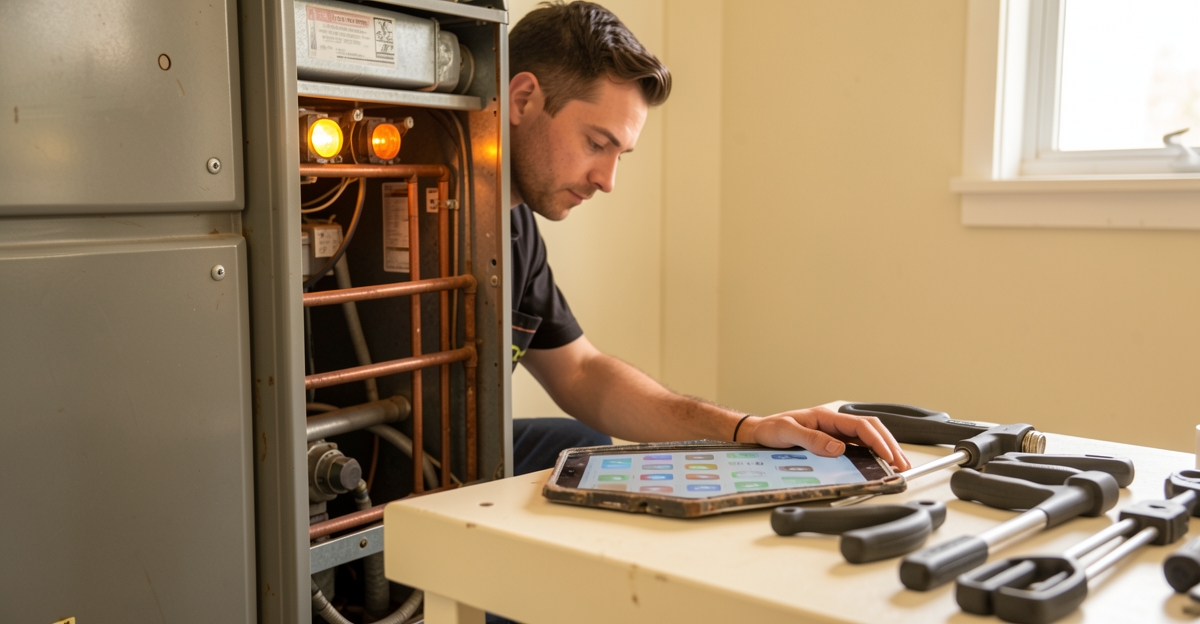
The Three Kinds of Home-Service Calls — and Why Your Best Hours Go to the Wrong One
Most home-service operators answer every ring like it’s an emergency, then spend their afternoons driving to quotes that were never going to book. The ones who protect their time learned to hear the difference.
TL;DR
- Not every inquiry is a job in disguise — some are price checks, some are planning for someday, and a few are ready to decide today; treating all three the same is how your best hours disappear.
- The operator who sorts before driving keeps afternoons for actual work instead of free estimates that go nowhere.
- Right-fit intake means knowing who’s deciding, what’s broken, and when they need it fixed — before you load the truck.
- Growth in service-sector revenue doesn’t automatically mean growth in operator margin — without intake discipline, more calls just mean more noise.
The Reality
A typical Tuesday morning for a home-service operator: the phone rings at 7:15 while you’re loading materials. It’s a homeowner with a dripping faucet. You jot the address, promise to swing by after lunch, and keep moving. At 8:30, a text comes through — “how much to clean gutters, ballpark?” You thumb back a range. At 9:45, another call: furnace making a noise, “sometime this week would be great,” they’re not sure if it’s urgent. You slot them for Thursday because the calendar looks open.
By noon you’ve committed to four stops. Two are actual jobs. One is a homeowner collecting numbers for a renovation six months out. One is a price check against the quote they already have. You won’t know which is which until you’re standing in their doorway, half an hour of driving each way, tools in hand, reading the room.
This isn’t a scheduling problem. It’s a triage problem masquerading as hustle.
The U.S. Census Bureau’s quarterly services tracking shows sustained expansion across service sectors — revenue growth that, at the macro level, looks like opportunity. But aggregate data doesn’t capture what happens inside a single operator’s van. The gap between “industry up” and “my afternoon gone” is where most home-service businesses live. More calls doesn’t automatically mean more booked work. It often means more sorting, more driving, more conversations that end with “I’ll think about it” — the polite no that costs you two hours you could have spent on a job that was ready to go.
The Bureau of Labor Statistics occupational data frames home-service work among personal care and service occupations where median wages reflect the physical, time-bound nature of the labor. The wage is earned by the hour, on-site, with tools. There is no passive income in a service call. Every hour allocated to a non-job is an hour that doesn’t generate revenue and can’t be recovered.
Why It Costs You
The three kinds of calls aren’t categories in a spreadsheet. They’re patterns in how people talk when they need something fixed.
The emergency — “water’s coming through the ceiling,” “furnace is out and it’s supposed to freeze tonight.” These callers are ready to decide. They need you to show up, diagnose, and start. The friction isn’t their commitment; it’s your bandwidth. If you’re already committed to a “ballpark” estimate across town, you lose the emergency to the operator who answered with a clear path to yes.
The someday project — “we’re planning to remodel the bathroom next spring, just getting ideas,” “thinking about a tankless water heater, what’s the rough cost?” These callers aren’t deciding today. They’re information gathering. There’s nothing wrong with the conversation, but it belongs in a different container than your Tuesday afternoon. Treat it like an emergency and you burn daylight on a timeline that doesn’t exist.
The comparison shop — “what’s your rate for a service call,” “can you beat $X?” These callers are deciding now, but not on quality or fit. They’re deciding on price alone, and they already have a number in mind. You can take the call, but know what you’re walking into: a conversation structured around a number you didn’t set, with a caller who’s already framed the transaction as commodity.
The cost isn’t just the drive time. It’s the context-switching — the mental load of shifting from diagnostic mode to sales mode to educator mode and back, sometimes within the same hour. It’s the optimism required to treat every call as potentially real, and the cumulative fatigue when too many aren’t.
How Right-Fit Operators Handle It
The operators who last aren’t the ones who answer faster. They’re the ones who hear structure in the first thirty seconds.
A call with clear timeline, defined scope, and a present decision-maker has different physics than one without. The homeowner who says “the dishwasher is leaking into the subfloor, my partner’s here, we need it stopped today” is telling you three things that matter: urgency, access, and authority to proceed. The caller who says “I’m getting a few numbers for a project we’re considering” is telling you something too — useful information, just not “load the truck now.”
Right-fit operators don’t interrogate. They listen for what’s already being said. They know that a call with timeline, scope, and decision-maker present converts at a rate that justifies the drive — not because of any magic in the question, but because the caller has already done the internal work of deciding. The operator’s job is to recognize that work has happened, and respond accordingly.
This doesn’t mean refusing estimates or being short with planners. It means having a lane for each type of call. The emergency gets today’s slot. The someday project gets a brief phone screen and a follow-up in two months. The comparison shop gets your standard rate, clearly stated, with no negotiation energy expended. Each caller gets appropriate attention; your afternoon gets protected for the work that actually books.
The Bureau of Labor Statistics industry overview notes the professional and business services sector’s dynamics — job openings, turnover, the churn of workers moving between firms. For home-service operators, the relevant churn is internal: the cycle of optimistic scheduling, disappointed follow-through, and the slow erosion of confidence that tomorrow’s calls will be any different. Breaking that cycle happens at intake, not at the job site.
The Bottom Line
Your best hours — the ones where you’re actually working, solving problems, earning — are finite. Every operator knows this intuitively; the ones who thrive act on it structurally.
The home-service business that scales isn’t the one that answers every call instantly. It’s the one that knows, before the truck rolls, which calls are worth the rolling. That knowledge doesn’t come from a sixth sense. It comes from listening for what’s already in the caller’s words, and having a system that sorts before you sort yourself.
The growth in service-sector revenue is real. The Census Bureau’s latest selected services estimates track that expansion quarter by quarter. But revenue flowing through an industry doesn’t automatically flow through your schedule. The operator who captures their share is the one who treats intake as seriously as the work itself — who knows that a protected afternoon is worth more than a full calendar.
Your next call is coming. The question isn’t whether you’ll answer. It’s whether you’ll know what you’re answering before you say yes.
Activate Access at gatecurate.com/activate — same-day setup, no sales call required.
Related Articles
- The Job That Looks Like Money but Eats Your Whole Afternoon
- The Three Kinds of Home-Service Calls — and Why Your Best Hours Go to the Wrong One
- How to Spot Time-Wasting Leads Before You Call Back