How to Spot Time-Wasting Leads Before You Call Back
September 1, 2026 · from the GateCurate team
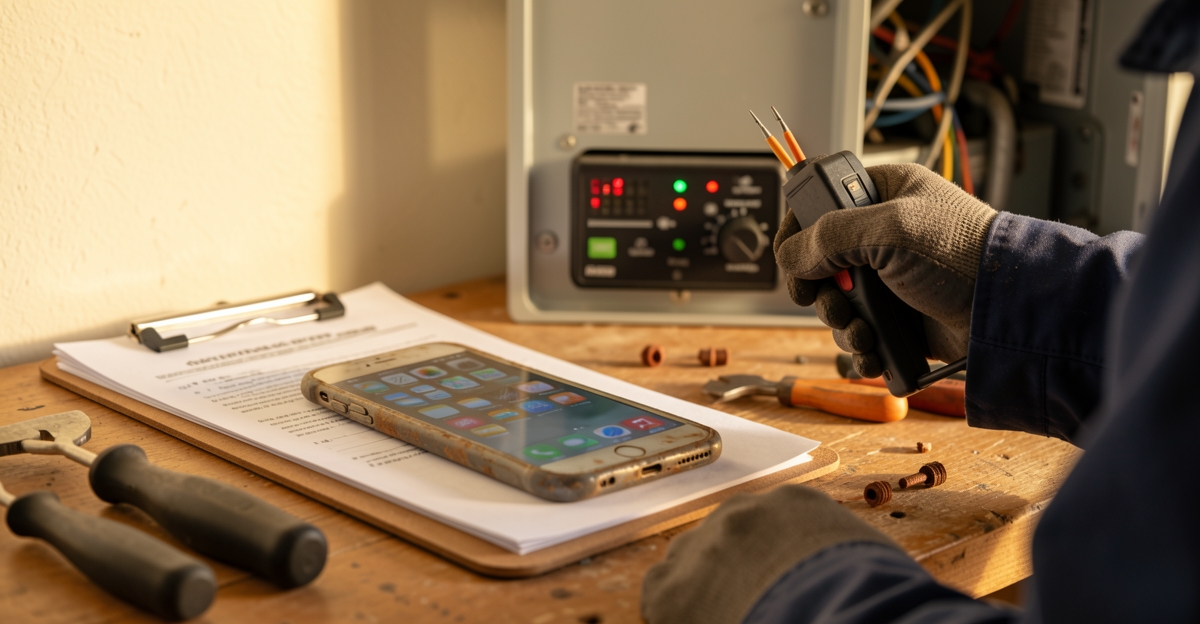
How to Spot Time-Wasting Leads Before You Call Back
A familiar morning for a home service operator: three voicemails, two “just checking price” texts, and one actual job. The trick isn’t calling faster—it’s knowing which ring to answer first.
TL;DR
- The leads that waste your time announce themselves in the first sentence—if you know what to listen for
- Right-fit operators sort intent before they sort speed, and it changes which jobs they book
- A five-minute pause to read the inquiry beats an hour on the phone with someone shopping three other crews
- The best operators treat “no” as a time-saver, not a lost deal
The Reality
The lead comes in while you’re elbow-deep in a condensate pan. By the time you wipe off and check your phone, you’ve got four notifications: a voicemail from a blocked number, a Facebook message that just says “how much,” a Thumbtack ping with a tiny budget and a tomorrow deadline, and a text from someone who mentions they got your name from the Johnson job last spring.
Which one do you call first?
Operators under pressure go in order. Or they call the one that sounds easiest. Or they call the loudest—the person who sent three messages in ten minutes. And too often, they spend twenty minutes on the phone with someone who was never going to hire them, while the Johnson referral waits until after dinner.
The pain isn’t that you’re slow. The pain is that you can’t tell who’s serious from the first touch. So you treat every lead like it’s real, and your day fills up with conversations that go nowhere.
The worst part isn’t the lost time. It’s the lost momentum. You’re geared up for a real job conversation, and then you’re deflated by the third “just getting prices.”
This is the hidden tax on home service operators: not the leads you lose to competitors, but the hours you lose to leads that were never yours to win. The operator who can spot the difference at intake keeps their energy for the calls that matter.
Why It Costs You
Every hour spent chasing a bad-fit lead is an hour not spent on a good one. But the cost is more than time.
There’s the scheduling gymnastics: you block a slot for an estimate, drive across town, and learn they want a small job done yesterday for less than it costs you to show up. There’s the mental residue: you carry the frustration into the next call, the one with the actual client. And there’s the opportunity you never see because you were tied up when the real lead came in.
The Census Bureau’s profile of America’s smallest businesses describes firms where the owner is the entire operation — the same person doing the work, answering the phone, and deciding which inquiry gets the next hour. In our view, more demand only becomes more revenue for the operator who can filter signal from noise: inquiry volume can grow while the hours available to sort it do not.
The Bureau of Labor Statistics has started examining independent work on its own terms — a 2025 Monthly Labor Review article uses earnings history to characterize the quality of nonemployee employment, treating how an independent operator’s hours convert to income as something worth measuring carefully. In our view, the same discipline belongs at intake: pressure to respond faster is not a system for responding smarter.
In that environment, speed alone isn’t a strategy. It’s a trap. The operator who calls back fastest still loses if they’re calling back the wrong person.
How Right-Fit Operators Handle It
Right-fit operators develop a nose for intent. Not through a script or a score—they learn to read the texture of an inquiry the way a good mechanic learns to read an engine note.
They notice the difference between “I need my AC fixed” and “My upstairs unit is blowing warm air and the compressor’s making a grinding noise.” Between “What’s your rate?” and “When can you start?” Between a message sent at 2 AM with no follow-up and one sent at 7 AM with a specific window of availability.
They also notice what isn’t there. No mention of the property. No sense of urgency. No indication they’ve done any homework. The absence of detail is itself a signal.
The best operators don’t rush to the phone. They rush to understand what they’re walking into.
This doesn’t mean they delay response. It means their first response is calibrated to what they already know. A quick text back to the price-shopper: “Happy to provide an estimate after a brief call—when works?” A prompt call to the detailed inquiry: “I can be there Thursday morning, and I’ve got a good idea of what’s happening from your description.”
The Census Bureau’s 2025 release on business owner characteristics counts and characterizes the people who own American businesses — it does not measure how many of today’s inquiries turn into this week’s jobs. That number belongs to the operator alone. In our experience, the operators who sort well book more real work with fewer wasted conversations — intake intelligence doing quiet work.
They also protect something harder to measure: their own disposition. Every operator knows the difference between starting Monday with three solid estimates and starting it with two dead-end calls and a no-show. The mental state you bring to the work matters. Sorting at intake preserves it.
The Bottom Line
You don’t need more leads. You need clearer sight of the ones you already have.
However the market moves, the operators who thrive won’t be the ones who respond to everything fastest—they’ll be the ones who know which response deserves their full attention.
Three questions to ask before your next callback:
- Does this inquiry contain a specific problem, or just a general request?
- Is there a timeline mentioned, or is the urgency all yours?
- Did they put any effort into finding you, or are you one of five numbers they messaged?
If the answer to all three is vague, you’re not looking at a delayed deal. You’re looking at a time sink. The sooner you see it, the sooner you can redirect to the lead that was ready all along.
Activate Access at gatecurate.com/activate — same-day setup, no sales call required.
Related Articles
- The Lead That Waits While You’re on a Job—and the Client Who Books Someone Else Before You Get Back
- When a Homeowner Calls Four Contractors and Only One Calls Back Fast Enough to Book the Job
- The Lead You Paid For—and Lost Before You Could Call It Back