Why Real Estate Teams Lose Listings at the First Conversation
May 19, 2026 · from the GateCurate team
Why Real Estate Teams Lose Listings at the First Conversation
The deal isn’t lost on price, marketing, or commission split. It’s lost in the first ninety seconds, before anyone has said anything worth remembering.
The seller already decided before you picked up
There’s a quiet pattern in how listings get won and lost in 2026, and most agents are still working from a 2015 playbook. The decision is happening earlier than ever, and the first conversation is no longer where you persuade — it’s where the seller confirms what they already suspect about you.
As HousingWire reported from Zillow’s data, 47% of buyers and 59% of sellers hire the first agent they speak with, suggesting that impressions formed online frequently shape outcomes before a first conversation takes place. That phrase — before a first conversation takes place — is the part most teams gloss over. The seller has already done the research. They’ve already shortlisted. By the time the phone rings, you are not introducing yourself; you are auditioning against an internal picture they’ve already drawn.
And the picture is sharper than it used to be. 36% of sellers now find their agents through online channels, more than double the 15% share in 2018, and 33% of buyers say online research played a key role in how they chose their agent.
Repeat buyers account for 55% of all home purchasers, bringing greater experience, higher expectations and a more deliberate approach to hiring an agent. These are not first-timers asking what an escrow account is. They’ve sold before. They’ve been disappointed before. They are pattern-matching against past agents within the first few exchanges.
So when an agent says “I lost the listing,” what they usually mean is: I lost the read. The seller didn’t dismiss the credentials. The seller dismissed the impression that this agent had done their homework before showing up.
The response-time gap that closes the door
The single most predictive variable in modern listing conversion isn’t price, brand, or experience. It’s the gap between when a seller signals intent and when an agent shows up sounding like they understand the situation. That gap is wider than most agents believe.
Industry responsiveness studies have long shown the gap to be startlingly wide: a large share of buyer inquiries receive a slow response — often many hours later — and a substantial portion get no response at all. The pattern hasn’t closed in the years since. More recent looks at agent productivity still find response times measured in tens of minutes on average, with the fastest responders answering almost immediately and the slowest taking hours.
That’s a structural problem dressed up as a personal one. Most agents aren’t lazy — they’re juggling. The lead lands in an email. Another lands in a portal dashboard. A third comes through a referral text. A lead from Zillow sits in one email account, a website form submission in another, and a direct text from a referral in your phone. No single notification surface means leads fall through the cracks.
Most agents don’t lose listings. They lose the read of who the seller already is by the time they pick up.
What looks like a response-time problem is really an intake problem. The information needed to show up sounding informed — what the seller said in the form, what they care about, what timeline they hinted at — is scattered across surfaces that don’t talk to each other. So the agent arrives in the first conversation cold, asking the seller to repeat what they already typed into a form three days ago.
That’s the moment the read goes wrong.
Why the first ninety seconds carry more weight than the listing presentation
Agents pour hours into the listing presentation deck — the comps, the marketing plan, the staging walkthrough. And the listing presentation is real work, well done. But HousingWire’s reporting on Zillow’s 2025 trends data puts the timing in sharper relief: many experienced buyers reported interviewing multiple agents before making a decision, and nearly half said they spoke with two or more agents — often narrowing their choices through online research before making contact.
By the time you present, the field has already been narrowed. The seller is looking for a reason to confirm or reject — not to be convinced from scratch. Today’s repeat buyers are intentional about who they hire, rewarding agents who show up with a clear strategy, strong process management, and a truly modern, digital-first experience.
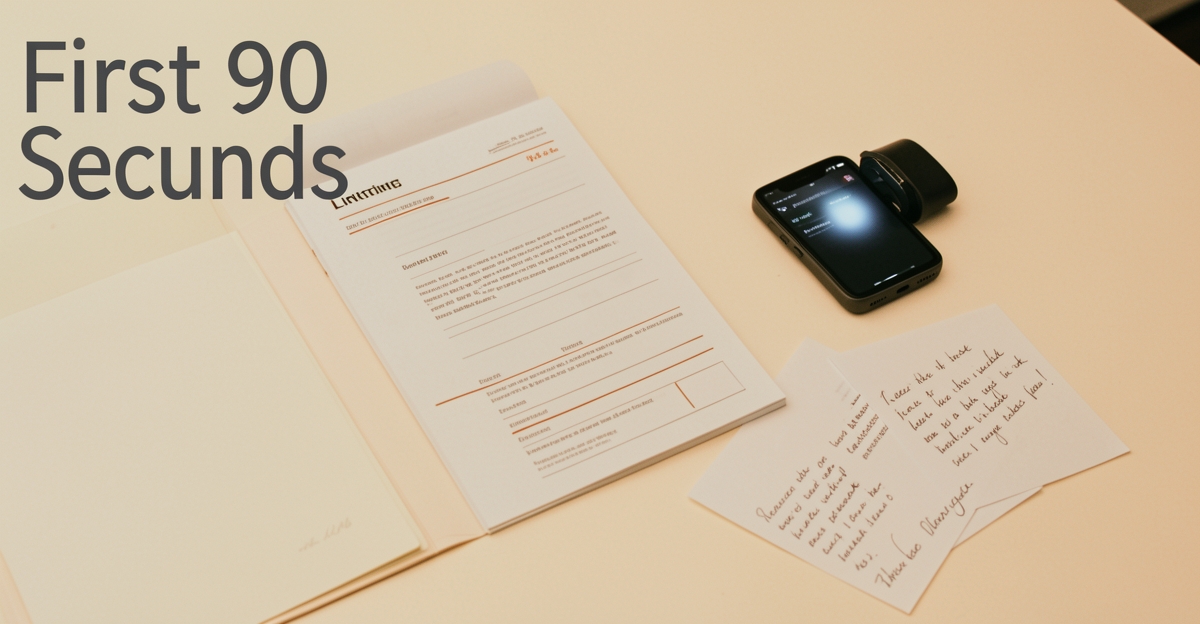
The first ninety seconds of a real conversation — the actual moment of voice or text contact — is when the seller decides whether the next sixty minutes of presentation are worth booking. If the first ninety seconds sound generic, the presentation doesn’t get a fair hearing. If they sound informed, specific, and calibrated to what the seller actually said earlier, the presentation becomes a confirmation, not an audition.
There’s also a communication-style shift agents are still adapting to. 50% of buyers who used an agent prefer texting or messaging apps when working with agents, while only 33% preferred phone calls. The “first conversation” is increasingly not a conversation in the old sense. It’s a short, written exchange where every word is read carefully and saved.
How right-fit teams handle the first conversation
The teams winning more listings in 2026 are not necessarily working harder on their listing decks. They are working differently on the moments before the deck ever comes out. Three shifts show up repeatedly.
They treat the inquiry itself as the start of the conversation, not the trigger to start one. When a prospective seller fills out a form, requests a CMA, or submits a property valuation, the response acknowledges what they actually said — not a generic thank-you. The follow-up references the address, the timing, the situation. The seller feels heard before anyone has scheduled a meeting.
They walk into the listing appointment already knowing the seller’s motivation and timeline. Motivation drives everything: a seller relocating for a job has urgency, an empty nester downsizing has flexibility, a divorcing couple may have competing interests, and knowing the “why” before you arrive lets you frame your strategy accordingly. The agents who win listings are the ones who don’t have to discover this in the first ten minutes. They’ve already gathered it. The appointment becomes a conversation about the strategy that flows from the motivation, not an interrogation to uncover it.
They build a structured, short intake that respects the seller’s time. Not a twelve-field form. Not a fifty-question questionnaire. A short, progressive sequence that captures the eight or nine things that actually matter — situation, timeline, property type, location, motivation, expectations, who else they’re talking to — before the agent gets on the phone. The seller doesn’t have to repeat themselves. The agent doesn’t have to guess.
The agents winning more listings in 2026 aren’t working harder on the deck. They’re working differently on everything that happens before the deck.
This is where GateCurate fits — and we mean fits in the literal sense, not as a sales claim. By the time a seller reaches you, you already know the shape of the situation. The motivation, the timeline, the property, the level of urgency. The first ninety seconds aren’t spent re-collecting what they typed into a form yesterday. They’re spent confirming you understand it. The conversation can be real.
You also see, at a glance, who’s actually serious. The seller who filled out the intake at midnight, gave a clear timeline, and named their motivation is in a very different posture than the casual valuation request from someone who isn’t sure they’re selling. You don’t need a system to score that for you to feel the difference — but you do need a system that surfaces both, side by side, in a way you can act on without thirty minutes of inbox archaeology.
The bottom line
The listing isn’t lost in the listing presentation. It’s lost in the gap between intent and informed contact — the gap where a seller types out what they need, waits, and gradually concludes that the agent isn’t paying attention. By the time the meeting happens, the seller has already made the call. They’re just being polite about it.
The fix isn’t faster typing or a sharper deck. It’s closing the gap. Knowing, before the first conversation, what the seller said, what they meant, and what kind of seller they are. Showing up to that first ninety seconds with the read already in hand.
That’s not a tech upgrade. It’s a posture upgrade. The teams making it are the ones treating intake — the quiet, unglamorous front edge of every relationship — as the part of the business that decides who wins the listing months before the listing exists.
If you’re rebuilding how your team handles the first conversation, GateCurate was built for exactly that rebuild. Activate Access at gatecurate.com/activate — we’ll show you what changes when the read is in your hands before the call starts.