The Hidden Cost of Manual Lead Triage in General Contracting
May 18, 2026 · from the GateCurate team
The Hidden Cost of Manual Lead Triage in General Contracting
Every contractor knows the cost of the wrong job. Almost none of them track the cost of figuring out which job is the wrong one — and that’s where the real money is leaking.
The response gap that already cost you the bid
A homeowner in Mar Vista taps the contact form on your site at 9:47 a.m. They’re standing in a kitchen they want gutted, holding a phone, and they’re going to submit that same form to several other GCs within minutes. The clock starts the second they hit send.
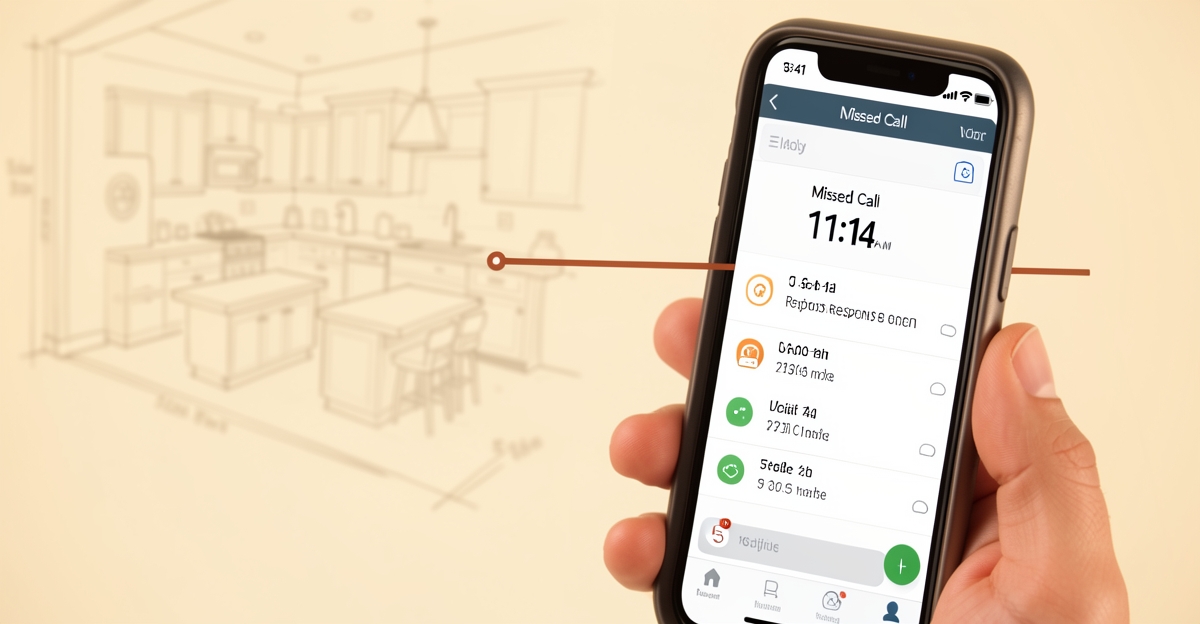
You see the email ping at 10:31 — you were on a framing inspection in Glendale, no signal. You call back at 11:14. Voicemail. You text. They reply the next morning: “Thanks, we ended up going with someone else.”
Anyone who has worked a lead pipeline has felt this gap. The typical contractor takes the better part of an hour to respond to a new lead, and reaching out within the first few minutes — rather than waiting half an hour — makes you dramatically more likely to land a meaningful conversation. The drop-off isn’t a slope. The drop-off after those first few minutes is not a gentle slope; it’s a cliff. Wait much longer than that and the odds of qualifying a lead collapse.
The contractor who shows up first to the conversation wins. The contractor who shows up first with the right conversation wins more.
And the part nobody puts on the spreadsheet: even when you do respond inside the window, a good share of the time you’re responding to a tire-kicker, a wrong-zip-code, or a homeowner who wanted a handyman and got routed to a GC. The triage work — figuring out who’s worth a callback in the first place — is the hidden tax. It eats your mornings. It eats your evenings. And it’s almost completely invisible until you start counting it.
Why the triage tax keeps growing, not shrinking
Three forces are stacking against the small-to-mid GC right now, and each one makes manual lead triage more expensive than it was a year ago.
The labor squeeze means every billable hour is more valuable. Nearly every contractor reports having a hard time filling open positions right now, and construction leaders are calling for more funding for construction education and new pathways for people to enter the workforce. When you can’t hire fast enough to cover the work you already have, every hour the owner-operator spends qualifying a junk lead is an hour not spent on a paying project. Worker shortages have become one of the most commonly cited reasons for project delays — a large share of firms point to shortages of their own or their subcontractors’ workers, and most firms report at least one project delayed over the past year.
Material costs are punishing every miscalibrated bid. The cost of materials and services used in nonresidential construction has climbed meaningfully over the past year, propelled by sharp increases in aluminum, steel and copper prices. The metals story is the sharp end of it. Aluminum mill shapes have surged — among the steepest year-over-year jumps since the supply-chain disruptions of a few years back — while steel mill products and copper and brass mill shapes have each posted hefty increases of their own. If you’re walking into a scope conversation cold — no idea whether the homeowner’s project is a modest bathroom or a high-six-figure addition — you’re going to give bad numbers, and bad numbers in this environment don’t get a second chance.
Permitting timelines are stretching, especially in LA. By most accounts the past year has been a historically weak one for housing construction in Los Angeles: residential approvals citywide came in among the lowest in over a decade, well below the steadier pace the city saw in the years before.
Factors such as inflation, high interest rates, and ever-changing immigration and trade policies have hampered permitting overall. The downstream effect for GCs: homeowners are more anxious, more researched, and more inclined to interview five contractors instead of two. The cost of “I’ll figure out who they are when I call them” goes up every quarter.
Labor is scarcer. Materials are pricier. Permits are slower. The one resource you control — your own time on the phone — is the most overspent input on your job site.
So the small GC ends up doing the work twice. Once to qualify the lead (twenty minutes on a call to find out it was the wrong zip). And once to actually price the job. The first twenty minutes are pure overhead. They don’t go on an invoice. They don’t show up in your CRM. They just disappear into the day.
What you find when you actually count the leak
Once you start watching the pipeline closely, it gets very clear what fast, qualified response is worth — and what slow, generic response costs.
The conversion math is brutal. Responding within the first few minutes makes you far more likely to convert a lead than waiting half an hour, and the contractor who responds first tends to win a sizeable share of jobs in multi-bid situations. Most contractors aren’t anywhere close. Average response times routinely stretch into days, while only a tiny sliver of field service businesses actually respond within the first few minutes.
The phone vs. web split matters too, because it tells you which leads are worth dropping everything for. Phone leads in home services tend to convert at a far higher rate than web-only leads — the kind of gap that’s hard to ignore. That’s a directional signal — not every web lead is junk, and not every phone lead is gold, but the gap tells you that intent signal is real when you stop treating every contact identically.
And the after-hours problem keeps growing. The window of opportunity in home services has narrowed sharply — from minutes down to little more than a moment — because homeowners now submit multiple forms simultaneously and book with whoever responds first. If you’re a small GC running a job site by day and the inbox by night, you’re not losing leads to better contractors — you’re losing them to faster ones.
There’s a related pattern showing up in operator workflows across home services. The most effective intake flows aren’t long forms or generic chatbots. They’re short, sequential, low-friction question sequences — issue, property type, location, timing, then contact details. Operators using this approach see higher completion rates and richer information arriving on their phone before they ever pick it up. The pattern is converging on a consistent minimal set of fields: name, contact, location, service type, brief description, urgency, property type. That’s not a form. That’s a triage layer.
Speed without context is just organized chaos. Being first to call back only works if you sound prepared when you do.
That quote — “speed without context is just organized chaos. Being first to call back only works if you sound prepared when you do” — is the part the speed-to-lead industry keeps underselling. Speed alone doesn’t win. Speed plus knowing what the call is about before you dial wins. Without the second half, you’re just losing faster.
The GateCurate approach: qualification happens before the phone rings
Here’s the operator outcome to picture: a lead hits your inbox, and before it hits your inbox, it’s already been worked. Not by you. By the intake layer.
By the time you see the notification, the lead has already answered the questions you would’ve asked on a twenty-minute discovery call. What kind of property is this? Owner-occupied or investment? What’s the project — kitchen, addition, ADU, full gut? What’s the timing — emergency, this quarter, “thinking about it next year”? What zip code? What’s the rough scope they’re describing in their own words?
You don’t see a form dump. You see a one-line read on whether this is a real conversation or a no-go — and the reason underneath it, in plain language. “Owner in your service area, kitchen remodel, has architect plans, ready in 30 days.” Or: “Out of service area, no timeline, vague scope — probably tire-kicking.”
You’re not scrolling. You’re not opening seven tabs. You’re not playing detective. You’re looking at the lead and knowing, in three seconds, whether to call now or pass.
The conversation that follows isn’t a qualification call. It’s a working call. You already know what they want. They already know you came prepared. The first five minutes — the minutes that used to be “so tell me about your project” — are now the minutes where you’re talking through scope, walking through what their permit timeline might look like in their specific neighborhood, sketching ballpark thinking. That’s the conversation that wins the bid. That’s the conversation that justifies your price.
The triage tax goes from twenty minutes per lead to zero. Not because you got faster at it. Because somebody else did it before the lead reached you.
What changes when the triage moves upstream
The shift isn’t subtle. It shows up on your calendar, in your numbers, and in how you feel at the end of the day.
- Your mornings come back. The first thirty minutes used to be triage. Now they’re either billable work or quiet. The leads you actually call have already filtered themselves.
- Your conversations get real. The first five minutes of every call are about the project, not about who you are or what you do or what zip codes you cover. You arrive at the work faster.
- Your bids get sharper. When you know the property, the scope, the urgency, and the rough budget posture before you walk the job, your number is closer to right on the first try. In a rising-material-cost environment, that matters.
- Your no-go rate gets honest. You stop saying “maybe I’ll get to it tomorrow” to the leads you already know are wrong. You decline cleanly or route them somewhere appropriate, and you stop carrying the guilt of unreturned voicemails.
- Your after-hours stops bleeding. The intake layer doesn’t sleep. When the homeowner submits at 9 p.m. with three other contractors getting the same form, you’re the one with structured information waiting in your phone by 9:02 a.m. — and your callback sounds like the third call of the conversation, not the first.
The compounding effect is the part operators feel after a month, not a week. You stop spending evenings cleaning up a CRM you don’t trust. You stop feeling like the inbox is the boss. You stop the slow, unmeasurable bleed of being the bottleneck on your own business.
Key Takeaways
- The hidden cost in general contracting isn’t slow response — it’s manual triage. The twenty minutes per lead spent figuring out who they are and what they want is invisible overhead that scales with every marketing dollar you spend.
- The labor squeeze, material inflation, and permitting drag are all making that overhead more expensive, not less. Every hour the owner-operator spends on the wrong lead is an hour not spent on a paying job.
- Speed alone doesn’t win. Speed plus context wins. Showing up first to the conversation only matters if you show up prepared.
- The fix isn’t telling your team to respond faster. It’s moving the qualification work upstream of the call — so the lead arrives already worked, and the conversation can start at the scope, not the screening.
- The outcome operators feel: mornings back, conversations sharper, bids tighter, after-hours quieter. Twenty minutes of qualification becomes zero.
If the triage tax is the leak you’ve been quietly absorbing, the fix isn’t a bigger CRM or a faster phone. It’s an intake layer that does the qualification before the lead ever hits your spreadsheet — so when you call, you’re already in the real conversation.
Activate Access at gatecurate.com/activate. A two-minute fit check, then secure checkout — your qualification layer runs the same day.